The Grader
Clarity
Most diamonds look flawless to the naked eye. Under the loupe, they tell the story of how they grew — read on a scale from Flawless to Included.
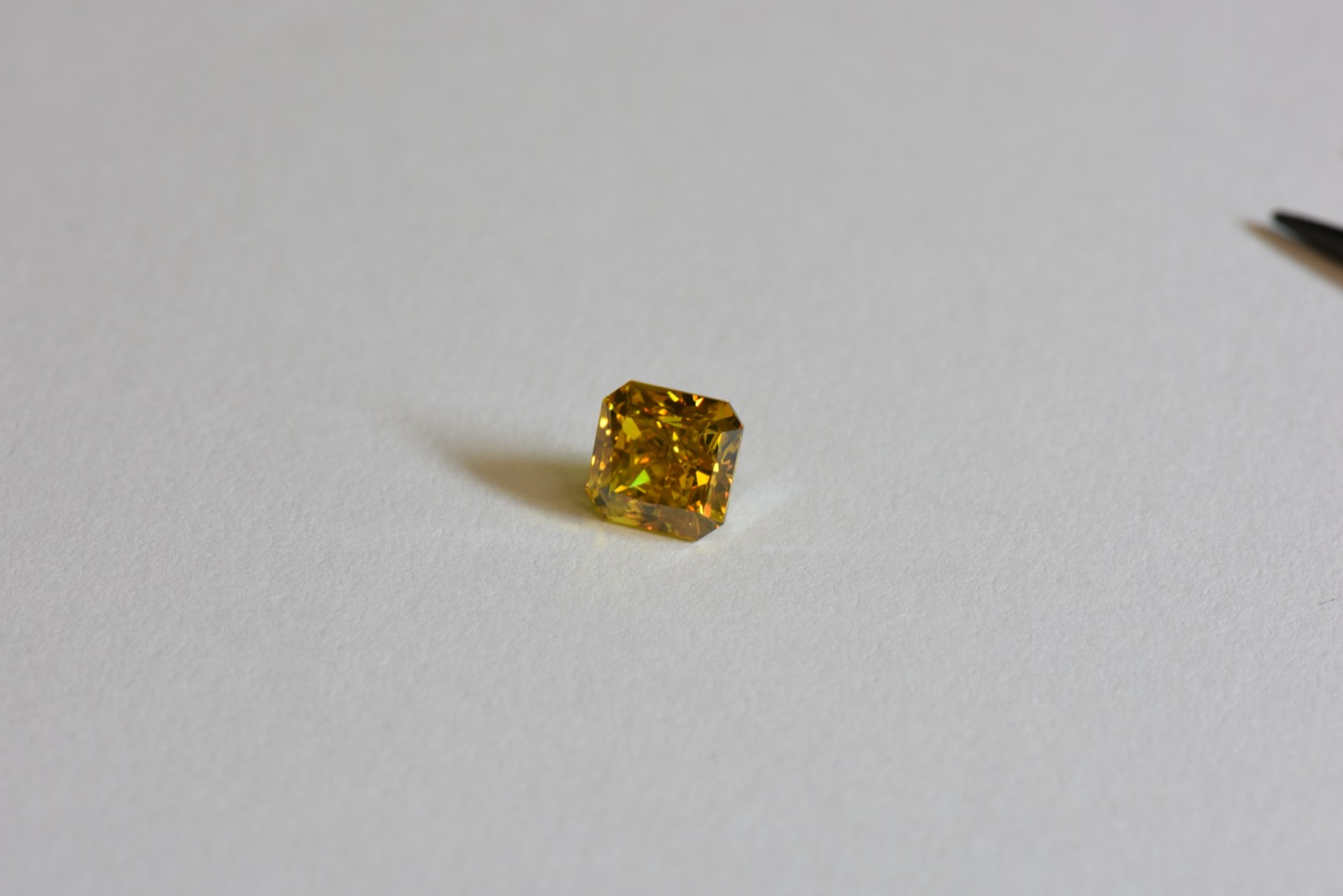
Most diamonds seem completely transparent to the naked eye. In fact they often contain inclusions — crystals, feathers, clouds — so slight that they are visible only with a loupe. They are not flaws so much as a record: the formation of a diamond happens in phases that are rarely constant, and the irregularities left behind are read, at ten-times magnification, as clarity.
The clarity scale
| Grade | Name | What you see |
|---|---|---|
| FL · IF | Flawless · Internally Flawless | No internal features; at most minor surface marks |
| VVS1 · VVS2 | Very, very slightly included | Minute inclusions, very difficult to see even with a loupe |
| VS1 · VS2 | Very slightly included | Minor inclusions, difficult to somewhat easy to see |
| SI1 · SI2 | Slightly included | Noticeable under the loupe; SI2 sometimes visible to the eye |
| I1 · I2 · I3 | Included | Visible to the naked eye, increasingly affecting brilliance |
The rarest diamonds of all are those free of inclusions or external marks — the Flawless stones. GIA grades them with no internal or external features (bar a few permitted naturals); the IDC calls the top of its scale Loupe Clean.
A grader’s method
Inclusions are described by where they sit and what they are — pinpoints and clouds, feathers and fractures, naturals left on the girdle, growth and twinning lines. The difference between, say, VVS1 and VVS2 comes down to the size, position, brightness and number of those features.
Related reading