The Miner
The Occurrence of Diamonds
Carbon, crystal habit and the deep-earth furnace — how a diamond comes to exist.
A diamond is a single element — carbon — and nothing more. Its legendary hardness lies not in some rare ingredient but in the way those carbon atoms are bound: a lattice packed tighter than anything else in nature. The same element, loosely arranged, is graphite, soft enough to write with. Order is the whole difference.
Crystal habit
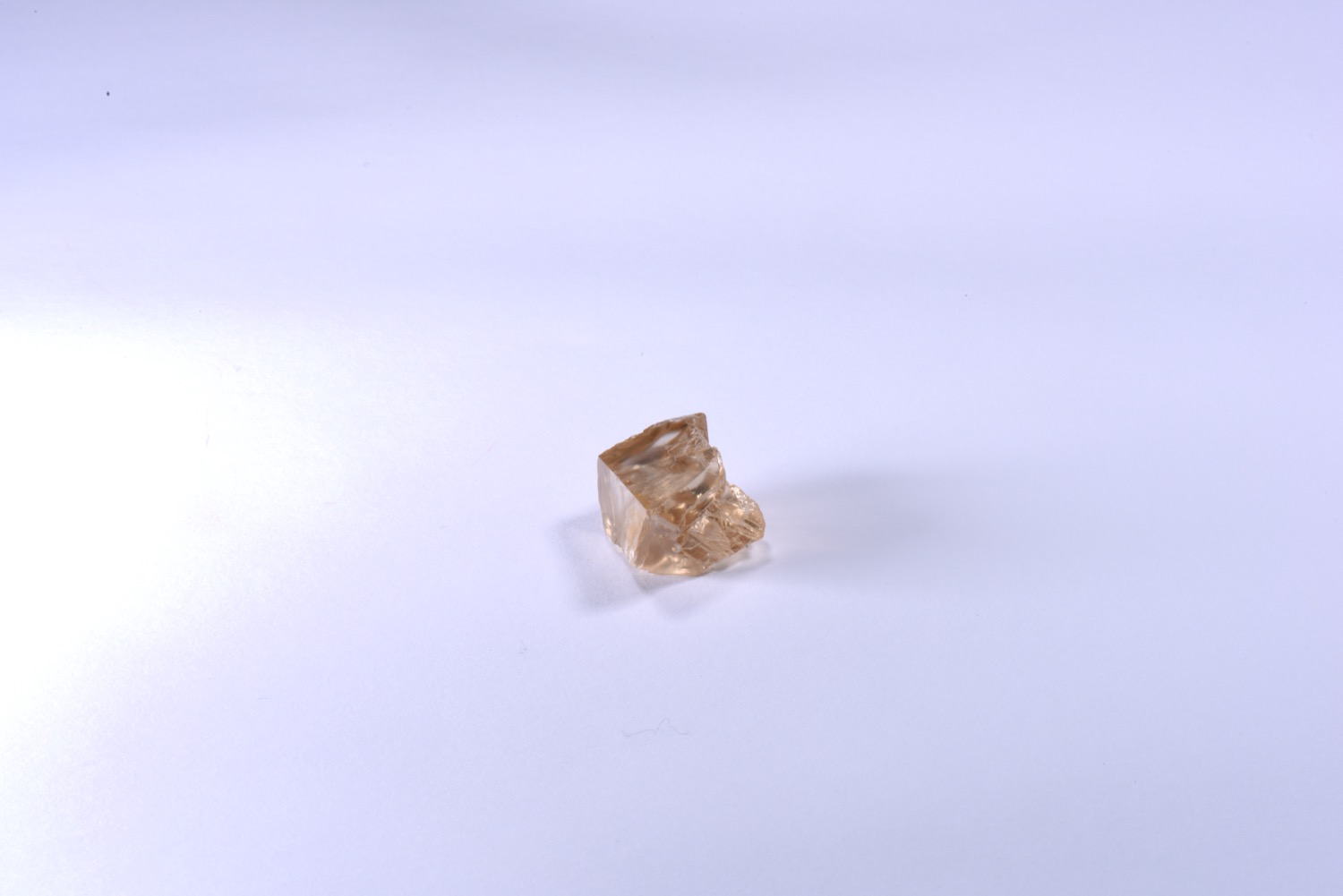
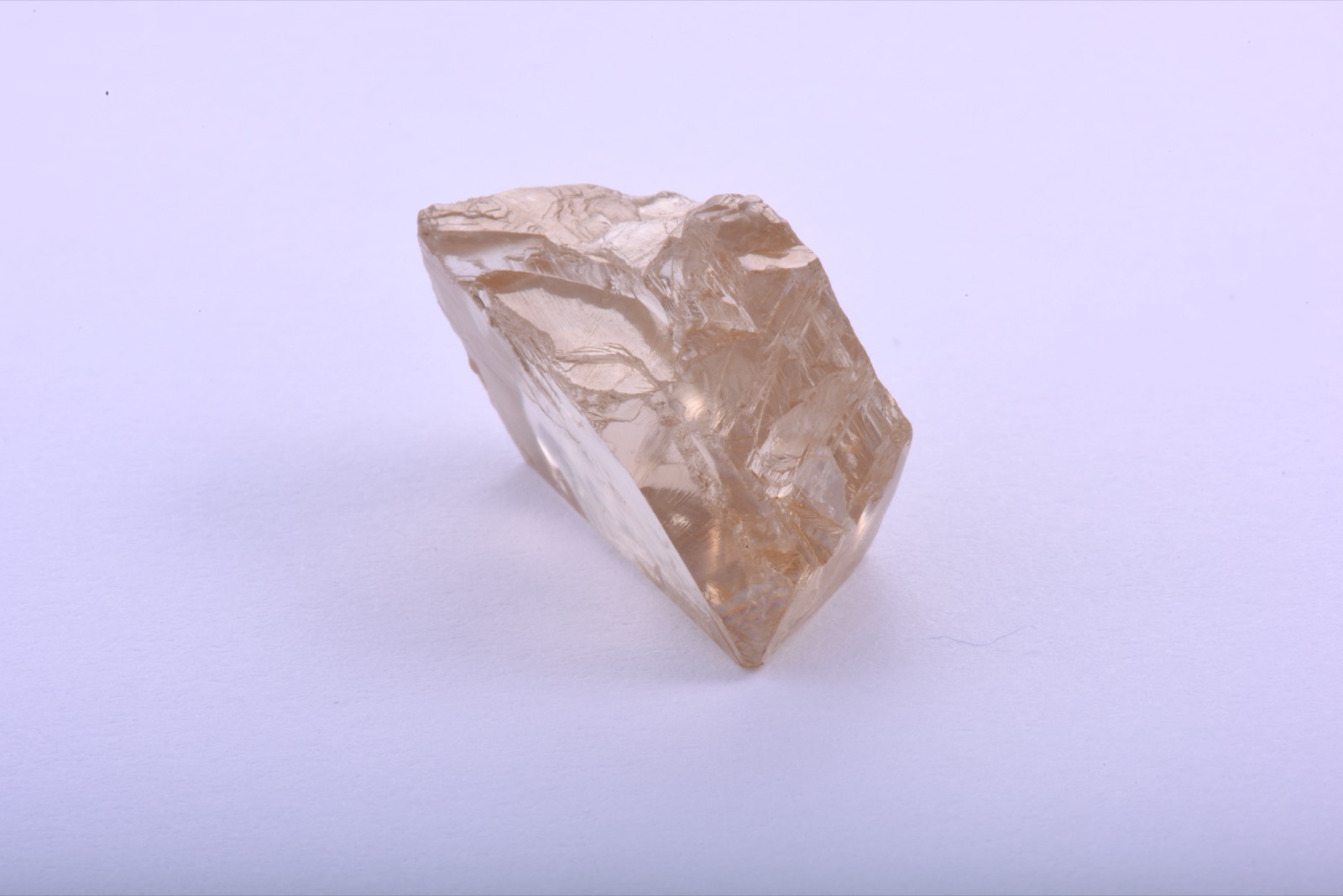
Diamonds crystallise in the cubic system, and they betray that order in their outward shape. Most often a crystal forms as an octahedron — eight clean triangular faces meeting at a point. Less commonly it grows as a rhombic dodecahedron of twelve faces, or, rarer still, as a simple cube of six.
| Habit | Faces | Frequency |
|---|---|---|
| Octahedron | 8 | The common form |
| Rhombic dodecahedron | 12 | Less common |
| Cube | 6 | Rarest of the three |
The deep-earth furnace
What we know of a diamond’s birth is drawn largely from the laboratory — from the conditions under which synthetic diamonds are made. The best-supported theory has diamonds forming in cooling liquid magma at an initial temperature near 1,300° centigrade and a pressure of roughly 70,000 atmospheres. Such heat and pressure exist only at depths of 130 to 200 kilometres below the surface, in the roots of active volcanoes.
The chemistry of that magma is never quite constant, and the variation leaves its mark. Where nitrogen is taken up into the lattice, the result is a Type I diamond; where it is absent, a Type II. When temperature and pressure waver during growth, the crystal records the disturbance as irregularities and malformations — twin layers, growth layers, the inclusions a grader later reads under the loupe.
A violent journey to the surface
A diamond is only stable at depth. If, during crystallisation, it is not exposed to air near 1,200° centigrade for a rapid drop in temperature and pressure, it decomposes back into graphite. That single fact tells us how diamonds reach us at all: through violent volcanic eruptions that hauled them upward fast enough to survive the trip. The volcanic rock that carried them — and in which they are still found — is called kimberlite, and the chimneys it fills, which miners simply call pipes, are between 100 million and 1.2 billion years old.
Related reading