Fancy Colours
Fancy Yellow
The canary diamond — where nitrogen's warmth deepens from a flaw into the prize.
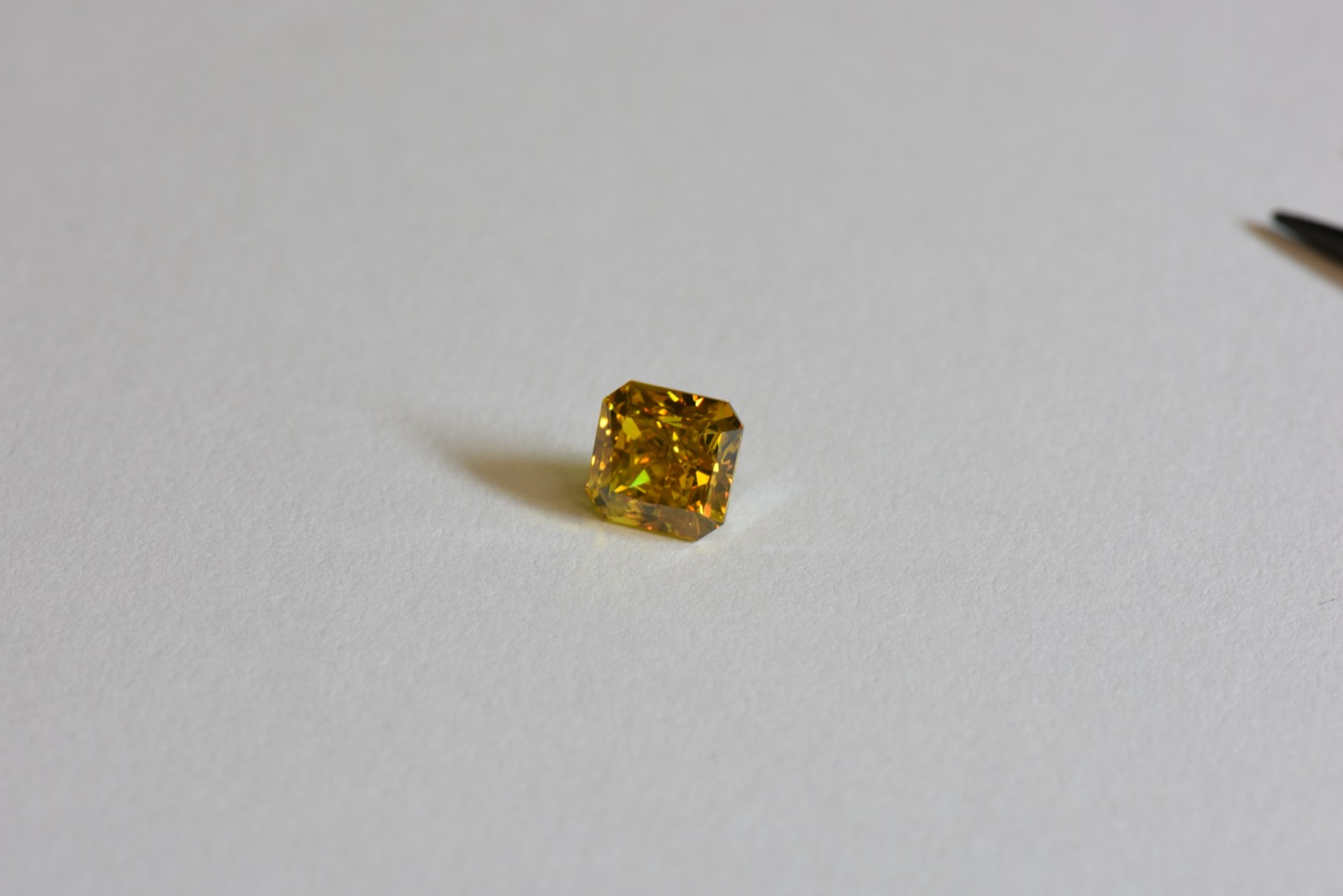
On the white scale, yellow is the enemy — the faint warmth that pulls a stone down from D toward Z. Push that same warmth far enough, though, and it stops being a fault and becomes a colour in its own right. A fully saturated yellow diamond is the canary: the most recognisable of all the fancy colours, and the one that turned the scale’s villain into its prize.
Nitrogen, the warm element
The yellow comes from nitrogen — the most common element to find its way into a growing diamond. Scattered through the lattice, it absorbs light at the blue end of the spectrum and leaves the warm glow we read as yellow. It is the same impurity that tints a J or a K stone; only the concentration differs. This makes yellow a Type Ib trait, the warm branch of the diamond family.
Where Cape becomes canary
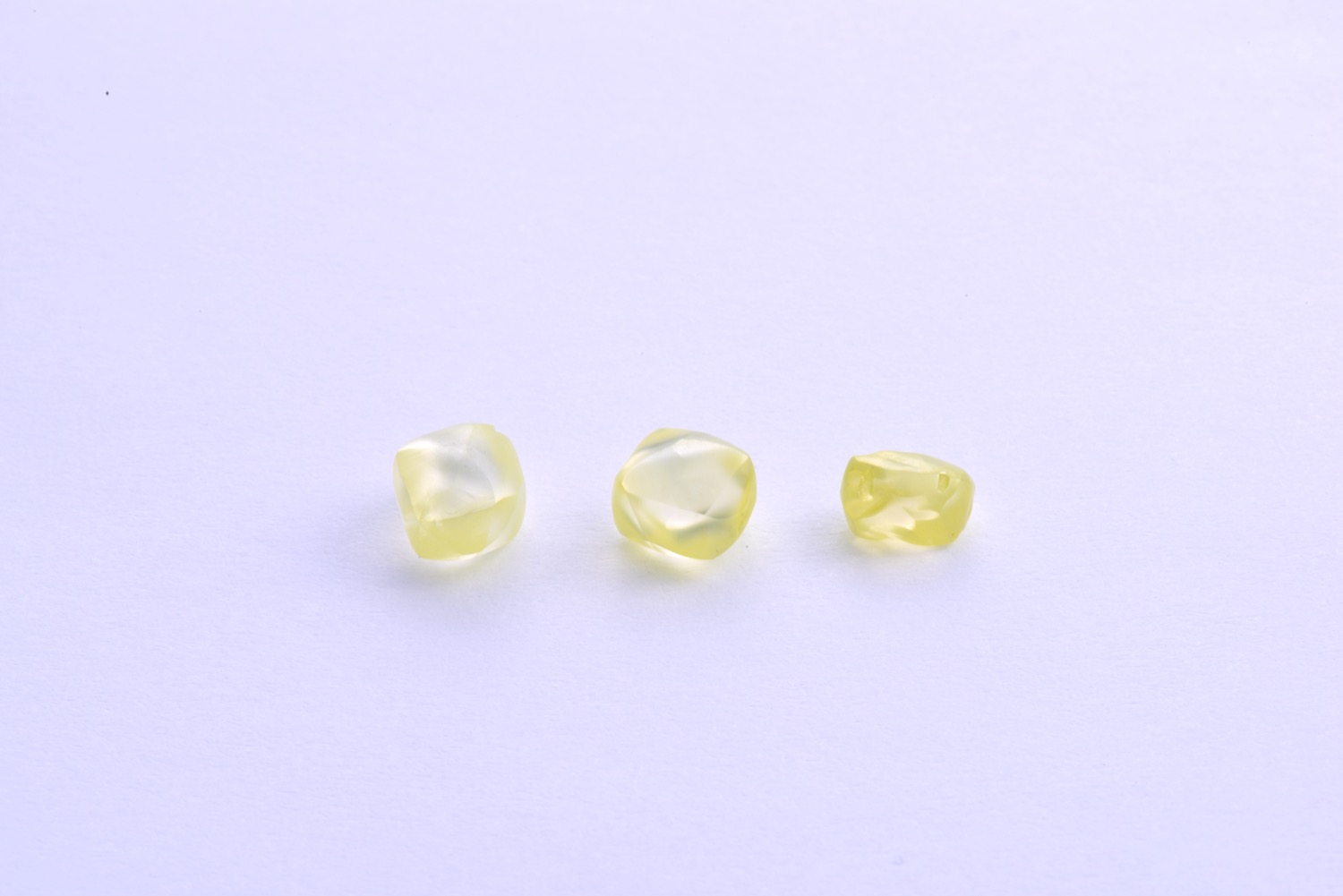
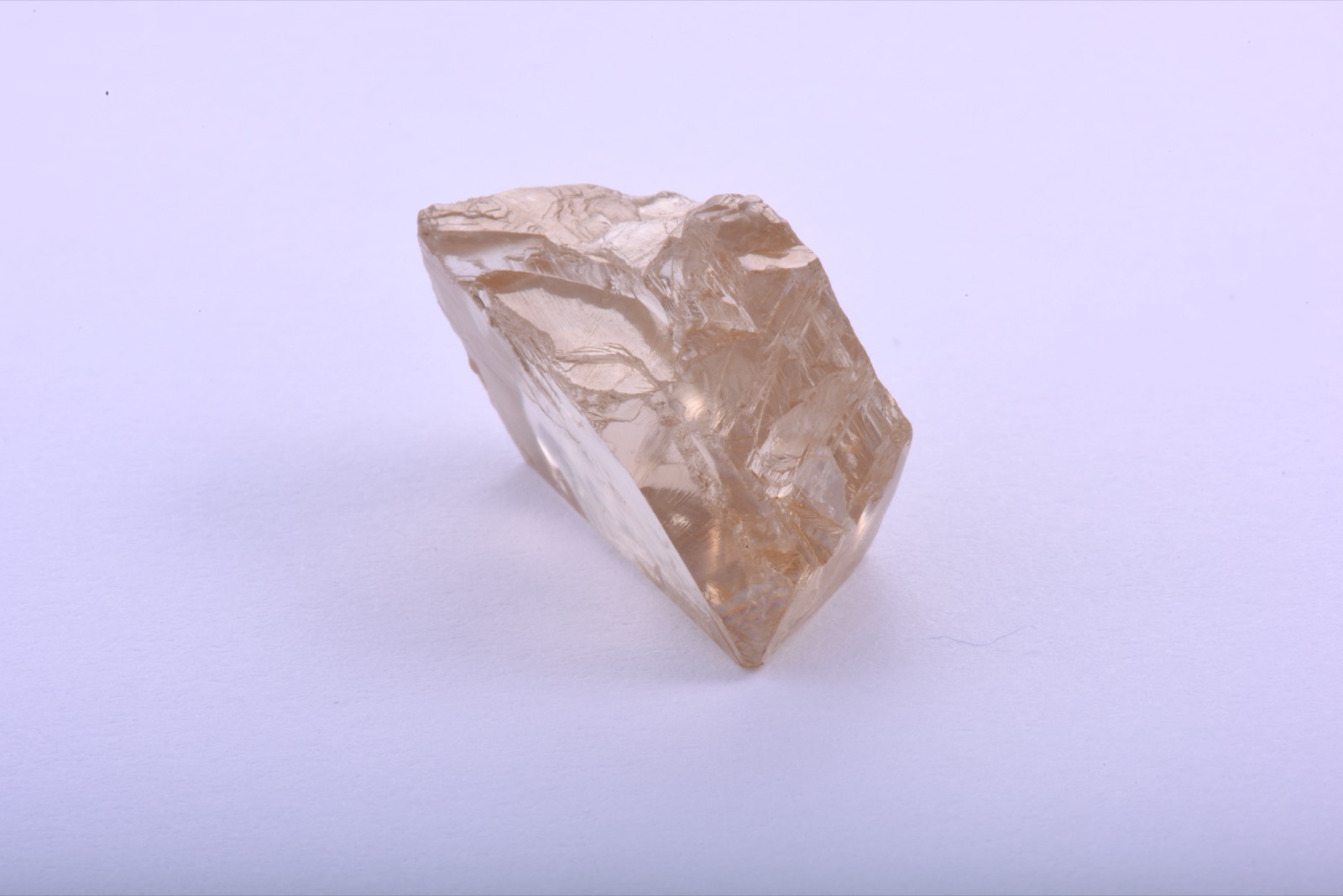
The old trade names trace the journey: a faintly tinted stone is a Crystal or a Cape; deeper, a Light Cape; deeper still, a Dark Cape. Somewhere along that line the colour crosses over — it is no longer a yellowish white but a true yellow, and the stone leaves the D-to-Z scale to be graded as a fancy on hue and intensity instead. That crossing point is exactly where Cape yellow tips over into Fancy Yellow.
The most available of the rare
Of the fancy colours, yellow is the most available — nitrogen is, after all, the commonest visitor to the lattice. But most available among the rarest stones on earth is still rare, and a clean, intense canary remains a genuinely scarce and coveted thing. Its warmth is also flattering to wear: a yellow diamond comes alive in a warm setting, where yellow gold answers the stone’s own colour rather than fighting it.
Related reading