Fancy Colours
Fancy Colours
Past the bottom of the white scale lies the rarest realm of all — diamonds graded not by absence of colour but by its presence.
The white scale measures a single thing: how little colour a diamond carries. It runs from D, the rarest colourless stone, down through faint warmth to Z. But colour does not stop at Z. When a hue deepens past the foot of the scale into something true and saturated, the diamond is no longer tinted — it is fancy-coloured, and it leaves the D-to-Z world behind entirely.
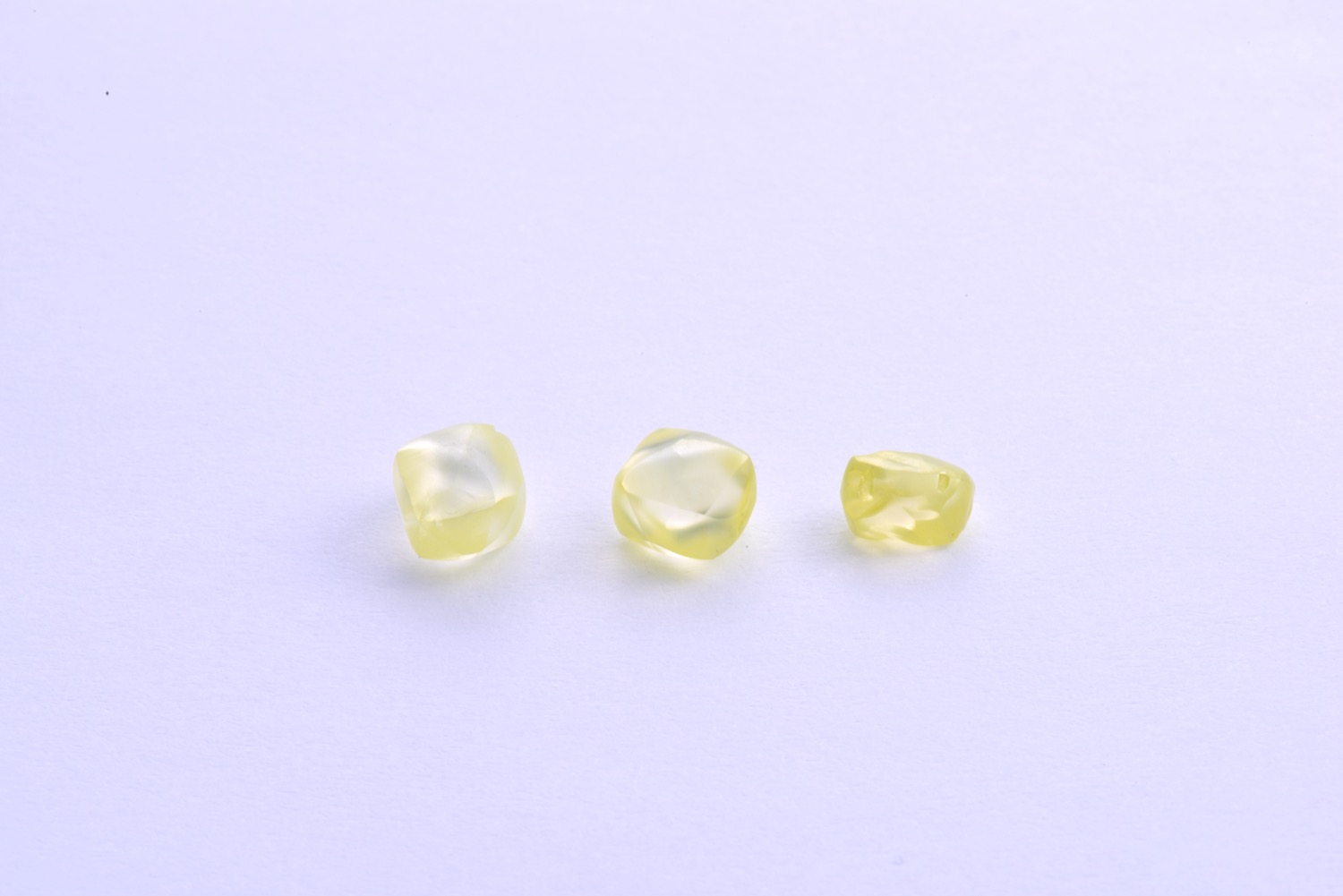
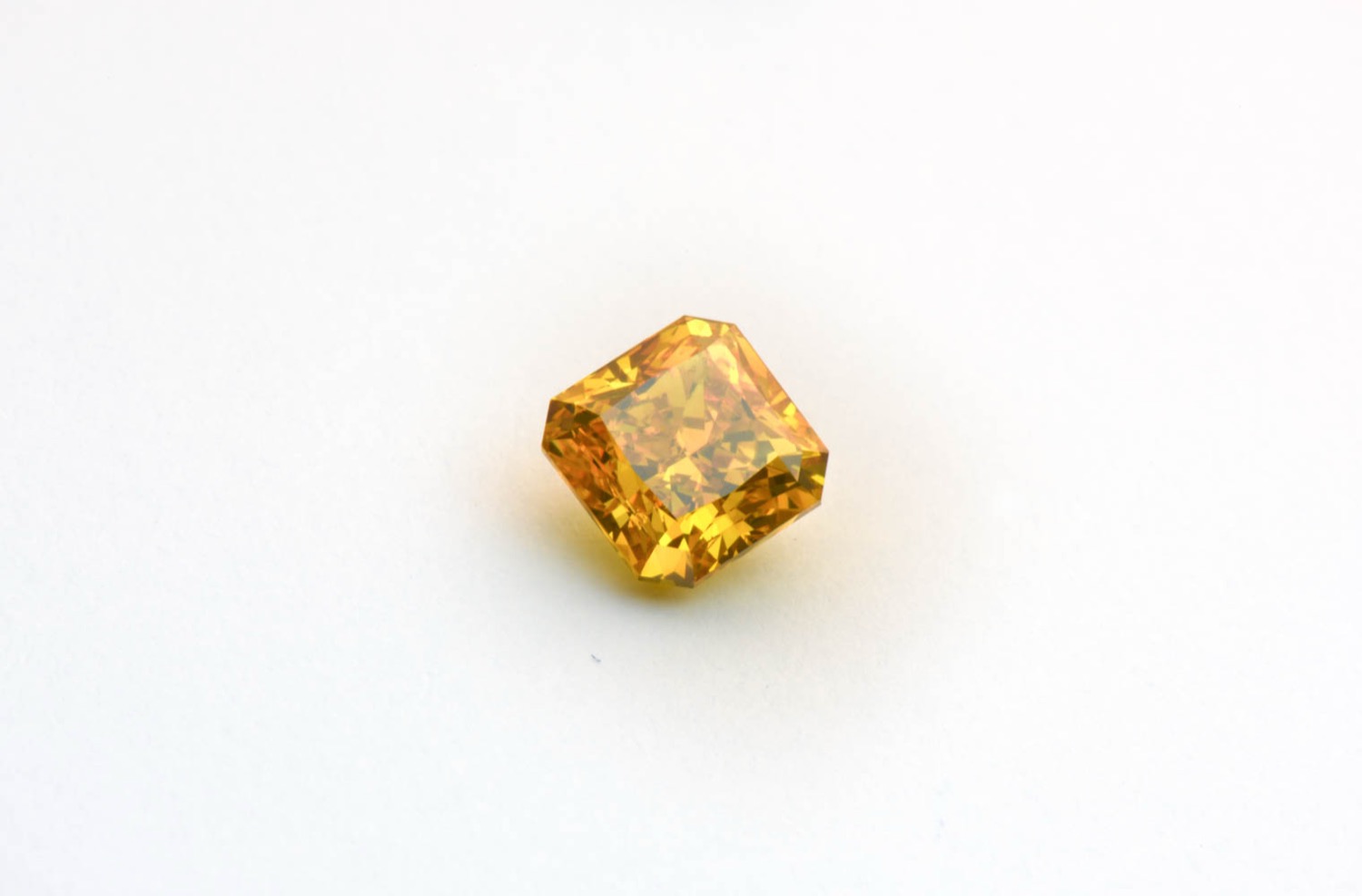
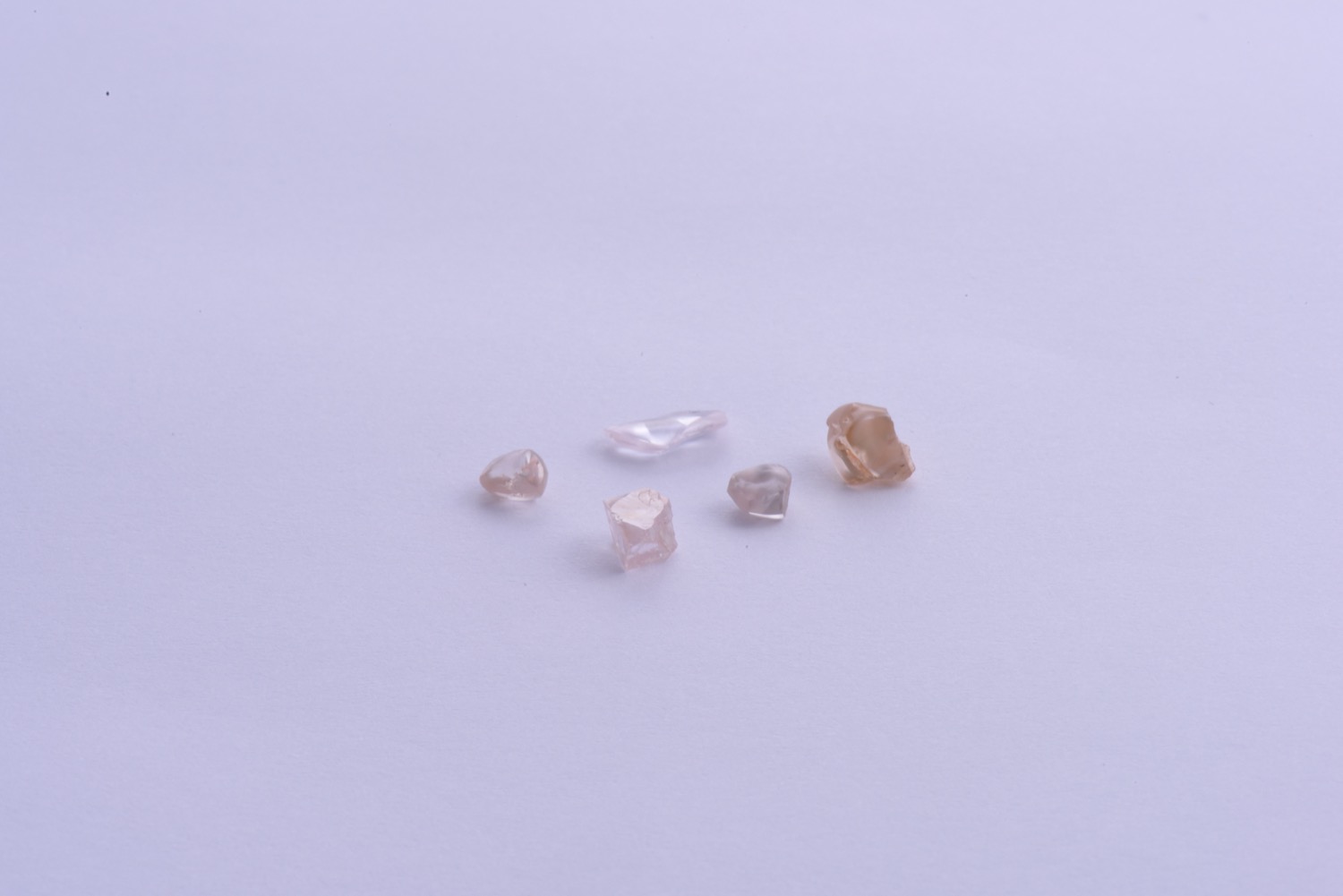
Up to Z, less colour means more value. Beyond it, the logic inverts: here colour is the prize. A fancy diamond is not graded on the white scale at all but on hue — the colour itself — and intensity, how richly that colour saturates the stone. These are the rarest and most valuable diamonds on earth, and their variety is fantastic: yellow and orange, brown and pink, blue, green, and the almost mythical red.
Where the colour comes from
A diamond is ideally pure carbon. Fancy colour is the trace of something else — an element caught in the lattice as the crystal grew, or a distortion in the lattice itself. The cause sorts most fancy diamonds into one of three atomic Types:
| Type | Cause of colour | Colours it gives |
|---|---|---|
| Type Ib | Nitrogen scattered through the lattice | Yellow, orange, brown |
| Type IIa | Distortion of the lattice; no measurable impurity | Pink, brown — and the rare colourless |
| Type IIb | Boron in the lattice | Blue, grey |
Three forces, then, write the colour into the stone:
- Nitrogen, the most common visitor, lends warmth — the yellows, oranges and browns of Type Ib.
- Boron gives the cool blues of Type IIb, and uniquely makes the stone semi-conductive.
- Natural irradiation, deep in the earth over millions of years, produces green.
- Lattice and plastic deformation — the crystal physically distorted under pressure — gives the pinks and browns of Type IIa, with no foreign element involved at all.
The rarest stones of all
Type IIa diamonds make up only a small fraction of all diamonds, and most fancy-coloured stones belong to this group. Their scarcity and their particular excellence make them the diamonds that set records at auction — the pieces a great house is built around. Where a colourless diamond is prized for what it lacks, a fancy is prized for what it holds: a colour the earth produced perhaps once in many millions of stones.
Related reading