The Polisher
The 10 Most Famous Cuts
Ten cuts that define the craft, from Tolkowsky's round brilliant to the romantic cushion.
A diamond can be coaxed into almost any form the hand is patient enough to cut. Yet across centuries of work at the wheel, only a few shapes have earned a permanent place in the repertoire. We return to them because each solves the same puzzle — how to release the most light from a single crystal — in its own particular way, and because each one quietly rewards a buyer for paying closest attention to one of the 4Cs. Here are the ten we keep coming back to.
Round Brilliant
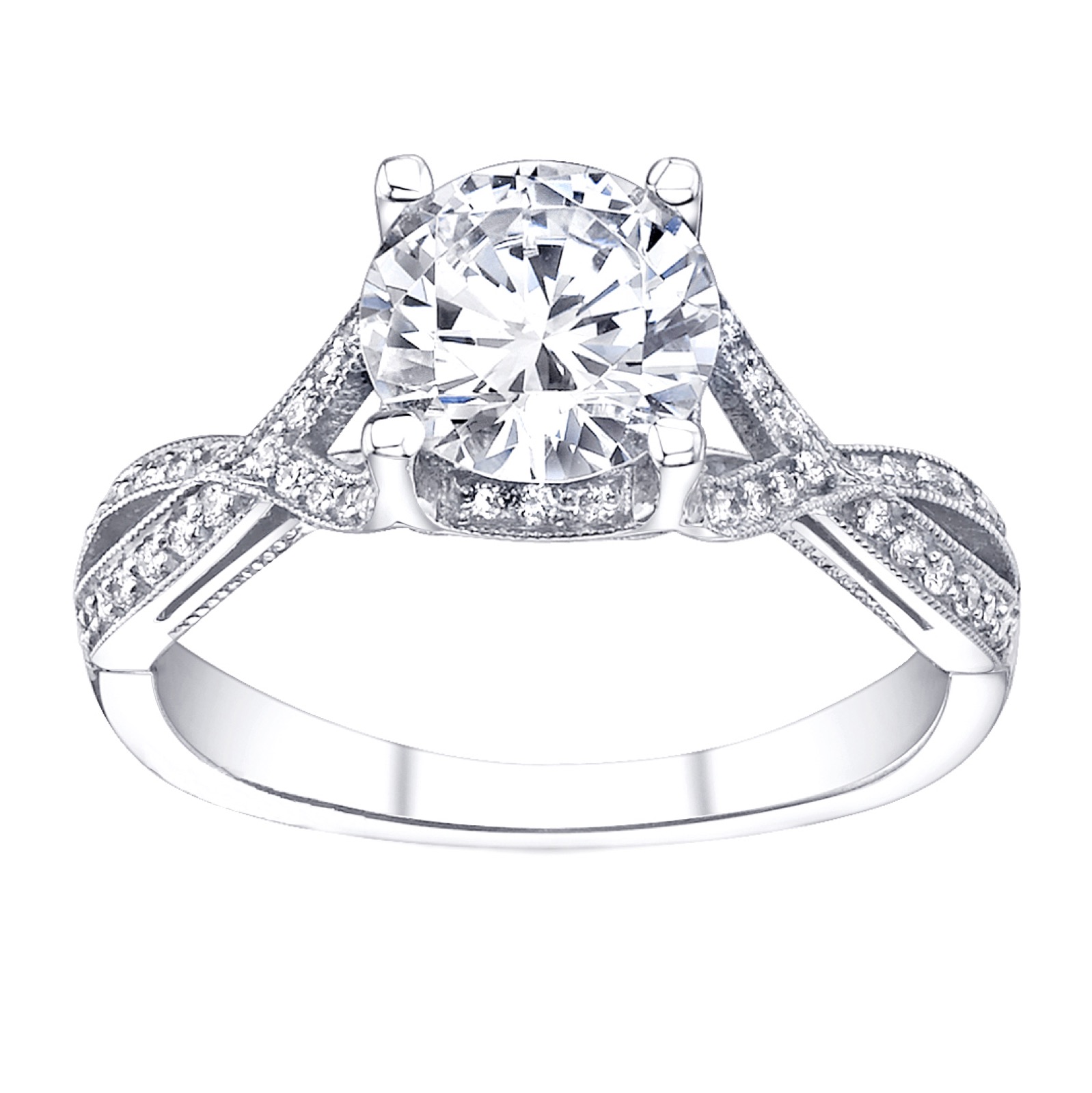
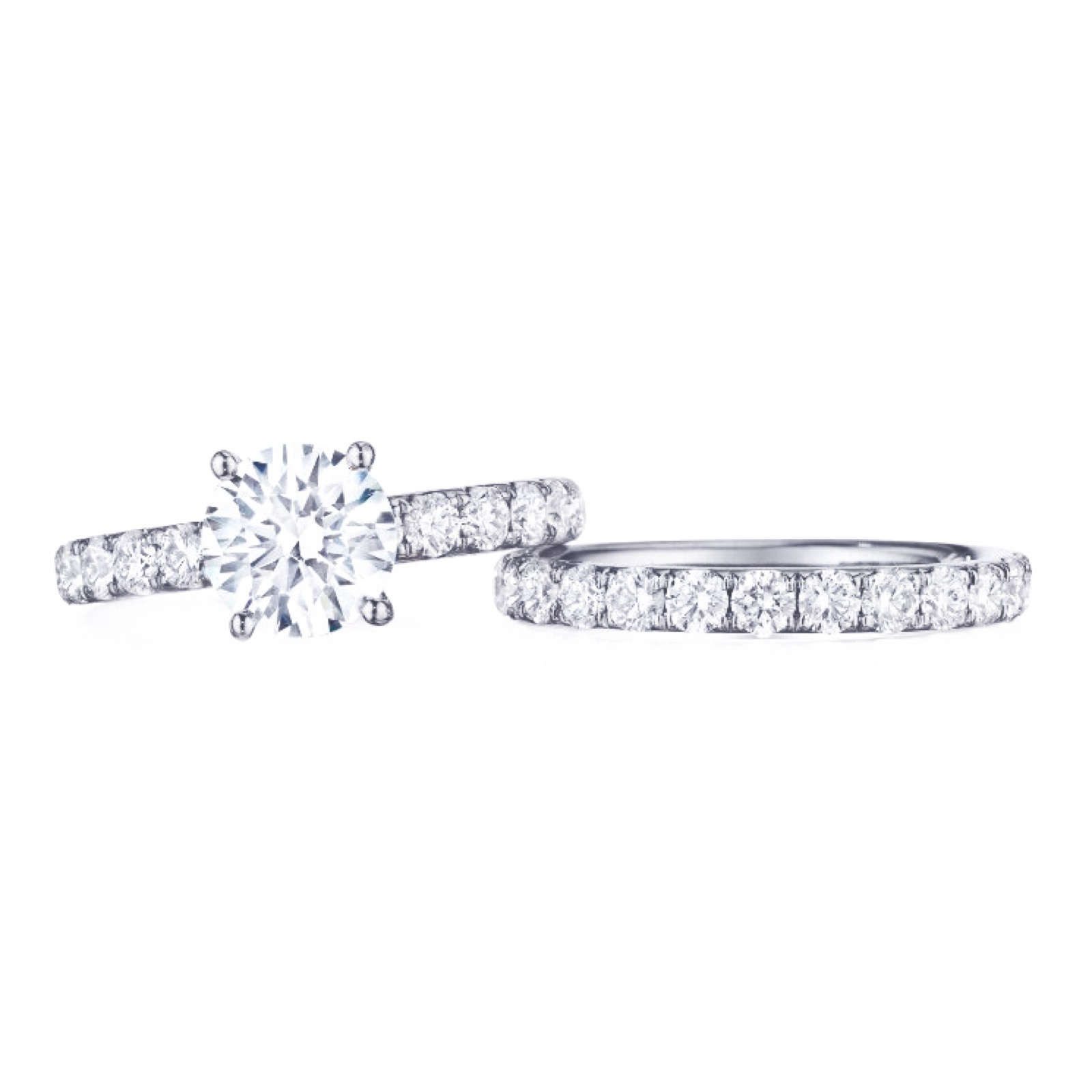
If one cut had to stand for the whole craft, it would be this one. The geometry we polish today was worked out by Marcel Tolkowsky in 1919, who set himself the problem of wringing the greatest possible brilliance and fire from a round stone and answered it with a 57-facet arrangement that has never been bettered. Roughly 75% of every diamond cut now takes this form. The C that matters is Cut — and no shape demands more of it. What looks like a single elegant cone is in truth the residue of years of study: refraction angles, the spread of white light into colour, the behaviour of the hardest material we know, all reduced to one unforgiving set of proportions.
Princess
Square at the table, brilliant in the way it throws light, the princess gave the modern bride a stone with the sparkle of a round and altogether sharper lines. It grew out of experiments with the Barion cut and arrived in the 1960s, where its near-rivalry with the round brilliant for sheer fire quickly found an audience. Here the C is Carat, and the reason is the rough: a princess keeps about 80% of the crystal it is cut from, where a round brilliant sacrifices closer to half — so the same outlay buys a visibly larger stone. One word of care at the bench and in the setting: those four sharp corners are the weak point, and want protecting.
Emerald
Long, open and unhurried, the emerald is a step cut that reads as both classical and contemporary — a quietly confident shape, and often a kind price for the size. Its name is no accident; the cut was first devised for emeralds, whose softness rewarded a calmer, less faceted treatment. Those long parallel steps draw the eye straight down into the stone rather than scattering it, and that is exactly why the C to mind is Clarity. With so clear a view to the interior, there is nowhere for an inclusion to hide.
Asscher
Picture an emerald cut pulled square, and you have the Asscher — the work of the Asscher Brothers in Holland in 1902. Its tiered, open facets give the same plunging look into the heart of the stone. It was the height of fashion through the 1920s, has since been treasured as a true vintage cut, and has found fresh admirers in recent years. Because the design invites the eye all the way in, it asks for a respectable showing across Cut, Clarity and Colour alike — there is no single flaw it will forgive.
Cushion
Soft-cornered and quietly romantic, the cushion sits on the family tree between the Old Mine cut and the oval, and its gently antique character has drawn a great deal of attention of late. The very feature that makes it so lovely — those broad, open facets — is also its one demand on the buyer, which is why its C is Clarity. Generous facets give light a beautiful spread, but they extend the same courtesy to any inclusion, leaving little hidden.
Marquise (Navette)
Few cuts carry a better story. Tradition holds that the marquise was cut to the command of Louis XIV, who wished a stone shaped after the smile of his mistress, the Marquise de Pompadour. Whatever the truth of it, the result is a modified brilliant of real drama — a long, pointed eye of fire. And like every brilliant, its fire is only as good as the geometry beneath it, so the C is Cut: the proportions must be exact, the symmetry true and the finish faultless, or the whole effect collapses.
Oval
The oval is the brilliant set free — the same light-handling, reworked into a softer, more modern outline with no loss of fire. It belongs to the modified-brilliant family, and shares the family’s single rule: everything rests on the Cut. Get the proportions and the finish right and it sparkles like its round cousin; get them wrong and no other virtue will rescue it.
Pear (Pendeloque)
Part round, part marquise, the pear is one of the most adaptable shapes a polisher can offer. Its lineage runs all the way back to 1475 and the Scaif, the first wheel ever used to cut and polish a diamond — and with that wheel came a new ambition, to place every facet in perfect symmetry. Centuries of refinement turned the early pendeloque into the lively, fiery teardrop we set today. The C is Cut, and the warning is specific: a careless one betrays itself as a bow-tie — a dark band thrown across the centre of the stone — or as uneven, raised shoulders.
Radiant
The radiant is what happens when you marry the long step cut of the emerald to the sparkle of a round brilliant. We owe it to Henry Grossbard in 1977, who arranged 70 facets for maximum fire and trimmed the corners to a neat crop. The stone is, frankly, a show-off. Two Cs deserve a glance — Cut and Carat. There is no fixed proportion, so it can lean square or rectangular to suit the wearer, provided the cutting stays harmonious; and because the shape is comparatively rare, its price per carat can be unusually generous.
Heart
It is difficult to imagine a more sentimental shape. The heart is not a classical cut so much as a gesture — romance rendered in stone. Everything hangs on the Cut: study the proportions before anything else, because a heart that turns out a touch too plump or stretched too long throws off its whole character at a glance.
Related reading