The Miner
The Occurrence of Diamonds
Carbon, crystal habit and the deep-earth furnace — how a diamond comes to exist.
Strip a diamond down to its essentials and you are left with a single element: carbon, the same stuff as soot and pencil lead. What sets the gem apart is not its ingredients but its architecture. The carbon atoms sit in a lattice bound more tightly than any other arrangement found in nature, and it is that density of bonding, rather than any rare component, that gives the stone its hardness. Let the same atoms relax into a looser order and you have graphite — so soft it leaves a mark on paper. The element is identical; only the geometry has changed.
Crystal habit
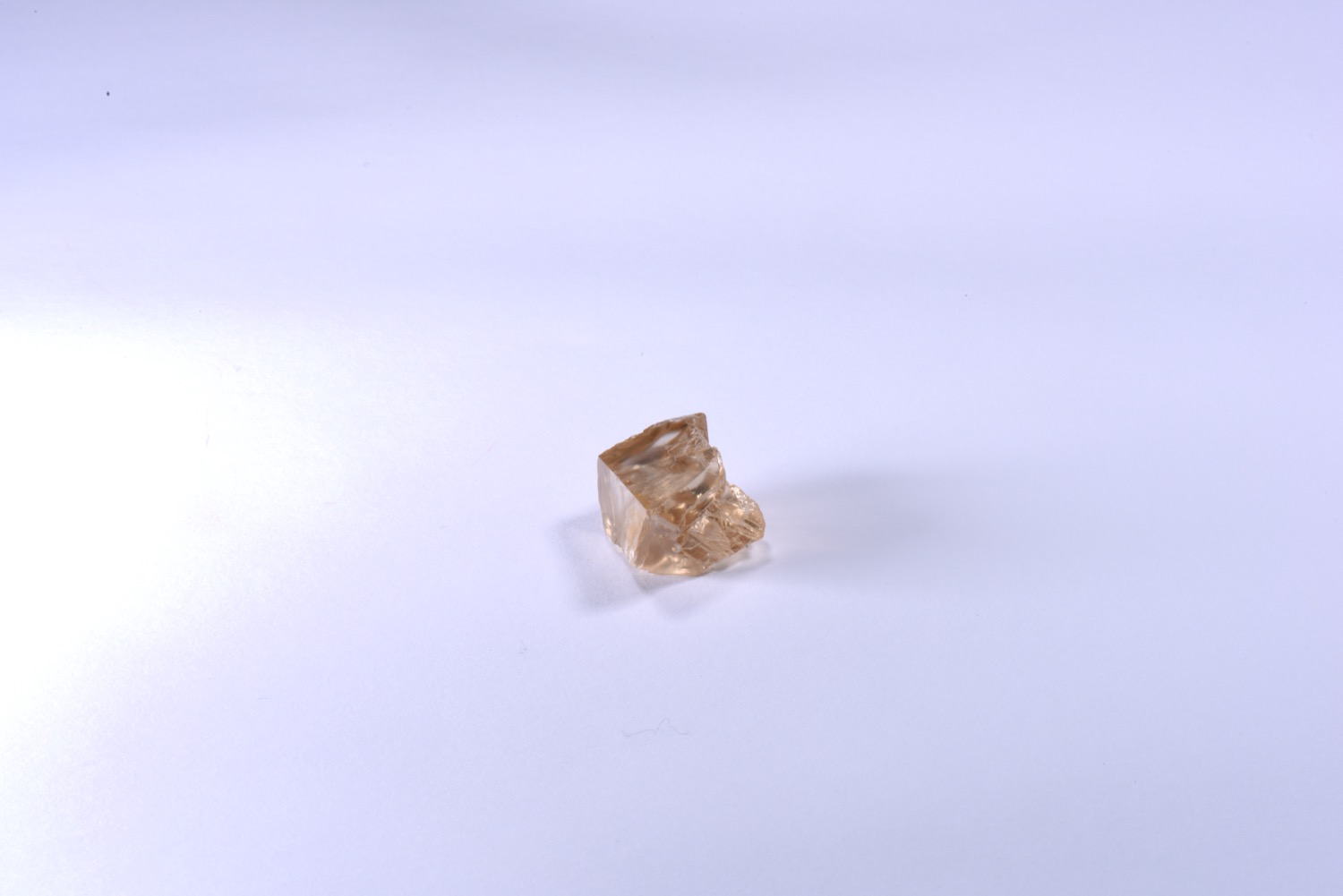
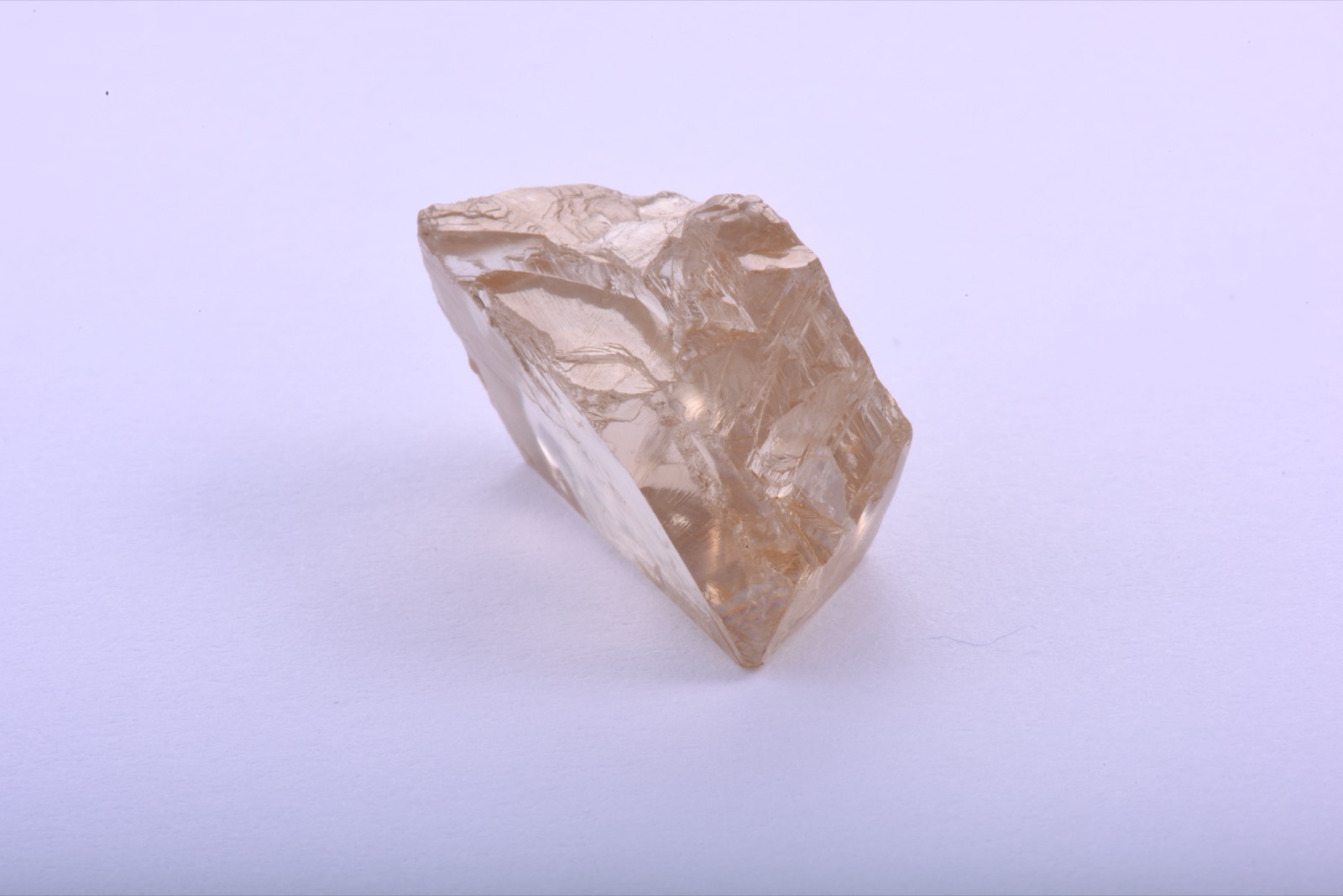
Because diamond belongs to the cubic crystal system, the discipline of its internal lattice tends to surface in the shape a rough stone takes. The form you meet most often is the octahedron, two four-sided pyramids joined base to base into eight triangular faces. Now and then a crystal will instead present twelve faces as a rhombic dodecahedron, and rarest of the three is the plain six-faced cube.
| Habit | Faces | Frequency |
|---|---|---|
| Octahedron | 8 | The common form |
| Rhombic dodecahedron | 12 | Less common |
| Cube | 6 | Rarest of the three |
The deep-earth furnace
Almost everything we understand about how a diamond is born has been reconstructed in reverse, from the laboratory conditions under which synthetic stones are grown. On the best evidence, the crystals take shape inside cooling liquid magma — a setting that demands a pressure in the region of 70,000 atmospheres and an opening temperature close to 1,300° centigrade. Conditions that severe are reached nowhere near the surface; you must descend to between 130 and 200 kilometres, into the molten roots that feed an active volcano, before they are met.
No two pockets of that magma carry exactly the same chemistry, and the differences are inscribed in the stones themselves. Should nitrogen be drawn into the carbon lattice as the crystal grows, what emerges is classed as a Type I diamond; a lattice that keeps nitrogen out yields a Type II. And whenever the temperature or the pressure lurches mid-growth, the crystal keeps a record of the upset — twin layers, growth layers, the malformations and inclusions that a grader will later decipher beneath the loupe.
A violent journey to the surface
Everything about a diamond presumes the depths; bring it up too gently and it unmakes itself. Unless the rising crystal is flung into contact with air at around 1,200° centigrade, so that heat and pressure fall away in an instant, it simply reverts to graphite. Survival therefore hinged on speed, and the only thing fast enough was catastrophe: violent volcanic eruptions that drove the stones skyward before they could decompose. They travelled, and are still recovered, inside a volcanic rock named kimberlite; the vertical shafts it has solidified within — pipes, in a miner’s shorthand — were emplaced somewhere between 100 million and 1.2 billion years ago.
Related reading